


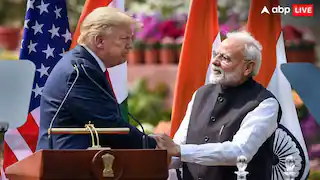

Modi-Trump Meet: Key Discussions on Deportation and Tariffs Expected
Indian Prime Minister Narendra Modi arrived in the United States on Wednesday evening (Thursday morning IST). He received a warm welcome at the Washington D.C. airport, followed by an enthusiastic reception at Blair House, where a large number of Indian expatriates gathered to meet him. Modi also met U.S. intelligence director Tulsi Gabbard. While the first day of his two-day visit has passed, the real diplomatic engagements are set for the second day, when he meets President Donald Trump. This meeting is considered highly significant for multiple reasons.
Modi and Trump are expected to discuss various issues, including strengthening trade and defense cooperation between the two nations. However, the key question is whether the most pressing concerns for India will also be addressed. If they are, will Modi be able to persuade his tough-minded friend, Trump? That remains to be seen.
Two Crucial Issues: Deportation and Tariffs
The two main issues at hand are deportation and tariffs. India is already facing challenges due to deportations, which have also triggered political debates in the Indian Parliament. The tariff issue has not yet impacted India directly, but it could come into effect at any time. Modi is likely to make an effort to address both issues before they escalate.
Deportation: The Problem is the Method
On February 5, the U.S. deported 104 undocumented Indian immigrants, sending them back to Amritsar on a military aircraft. Hundreds more are expected to be deported in the near future. While deportation itself is not a new occurrence, the manner in which these individuals were sent back—handcuffed and shackled—was unprecedented. This has sparked intense debates in the Indian Parliament, with opposition parties criticizing the Modi government for failing to prevent such inhumane treatment of Indian citizens. Many opposition leaders have demanded that Modi raise this issue during his meeting with Trump.
Given the political uproar, it is likely that Modi will bring up the matter with Trump. However, convincing Trump to change his stance may not be easy. Since his return to power, Trump has prioritized mass deportations of undocumented immigrants. The scale of these deportations is unprecedented, making it unlikely that the U.S. will shift to using commercial flights instead of military planes for such operations. One potential solution could be for India to arrange its own flights to bring back deported citizens. Whether this happens remains to be seen.
Preventing a Trade War Before It Starts
Trump has already imposed a 25% tariff on goods imported from neighboring Mexico and Canada, while China is facing a 10% tariff. India has not yet been targeted, but Trump has previously called India the “tariff king” during his last term. He has often complained that while the U.S. does not impose tariffs on Indian products, India levies excessive tariffs on American goods. One notable example was his criticism of India’s tariffs on Harley-Davidson motorcycles. Given this history, there is a strong possibility that the U.S. may impose tariffs on Indian goods in the near future.
Modi’s primary goal will be to ensure smooth trade relations between India and the U.S. and to prevent any barriers from emerging. However, convincing Trump may not be easy. India might need to consider offering some tariff reductions on American products in return for avoiding a trade war.
As Modi and Trump prepare for their crucial meeting, all eyes will be on how these sensitive issues are addressed and whether a middle ground can be reached.

Leave a Reply