


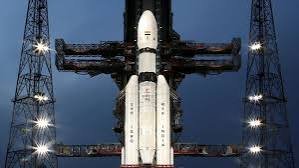
New Delhi: India is set to take another giant leap in space exploration with the launch of Chandrayaan-4 in 2027, aiming to bring lunar rock samples back to Earth. Union Minister for Science and Technology, Dr. Jitendra Singh, revealed the mission details, emphasizing its significance in advancing India’s space research.
Two-Phase Mission for Sample Collection
The Chandrayaan-4 mission will consist of two separate launches, employing heavy-lift launch vehicles (LVMs) to transport five essential modules into space. Once in orbit, these modules will autonomously assemble before heading toward the Moon’s surface for sample collection.
India’s Growing Space Ambitions

Apart from the lunar mission, India is gearing up for several other landmark projects. The Gaganyaan mission, scheduled for next year, will mark India’s first human spaceflight by sending astronauts into low Earth orbit (LEO) and safely bringing them back. Additionally, the Samudrayaan mission, expected to launch in 2026, will explore the deep-sea ecosystem. Three scientists will dive 6,000 meters below the ocean in a special submarine to study rare minerals, deep-sea biodiversity, and untapped resources.
Dr. Singh highlighted India’s rapid progress in space exploration, noting that ISRO has come a long way since its 1969 inception. With a new third launchpad under construction in Thoothukudi, Tamil Nadu, India is strengthening its capability for launching both heavy rockets and small satellites.

India’s Expanding Space Economy
India’s space economy, currently valued at $8 billion, is projected to reach $44 billion in the next decade. With new infrastructure, increased private sector participation, and record-breaking investments, India is poised to achieve major breakthroughs in space exploration.



Leave a Reply